Gravity
With the rapid growth of e-commerce, the company’s strategic focus gradually shifted from offline operations to online channels. To better integrate internal resources and streamline communication with multiple e-commerce platforms, the Gravity project was initiated.
Gravity is a middleware integration platform that connects internal enterprise systems with external platforms, including e-commerce channels, regional business systems, logistics services, and membership platforms. It provides unified data synchronization and inter-system communication across key business domains such as product management, membership services, sales operations, order processing, and logistics tracking.
By acting as a centralized integration hub, Gravity improves operational efficiency, data consistency, system reliability, and cross-platform collaboration across the enterprise.
Project Background
Before the Gravity platform was introduced, different business systems communicated with external platforms through scattered and tightly coupled integration logic. This made system maintenance difficult and increased the risk of data inconsistency, duplicated integration work, and unstable message delivery.
The Gravity project was designed to standardize system integration and provide a unified middleware layer for internal and external communication.
The platform aimed to:
- Centralize integration between internal systems and external e-commerce platforms.
- Improve data consistency across product, membership, sales, and logistics domains.
- Decouple business systems through message-based communication.
- Improve message reliability through retry mechanisms and scheduled compensation tasks.
- Standardize API security, request forwarding, and integration workflows.
- Support future business expansion across online channels.
System Architecture
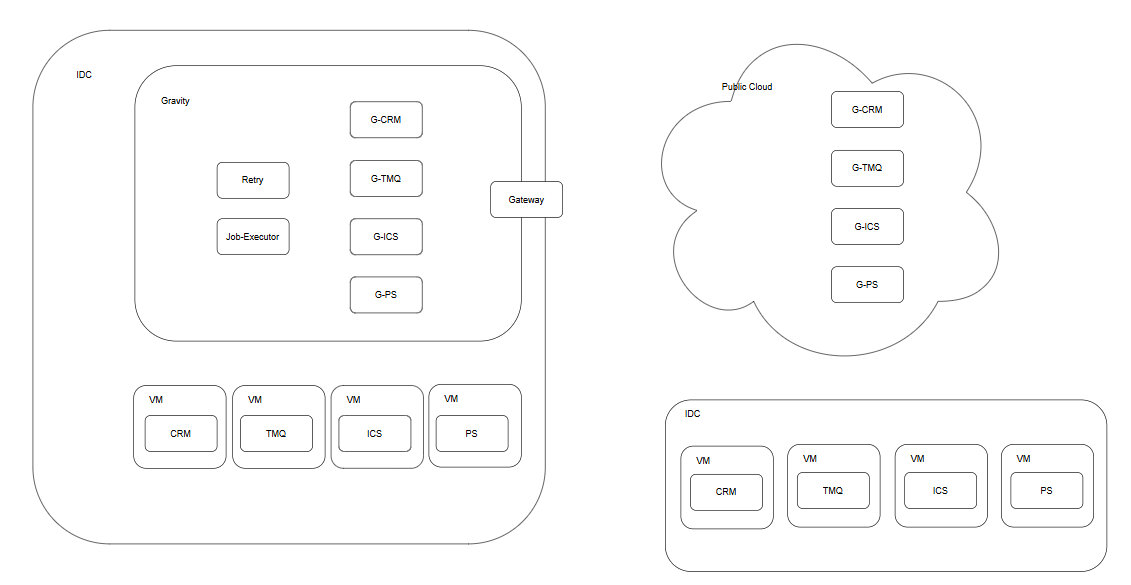
The system adopted a microservices-based architecture using Spring Cloud, RabbitMQ, Redis, scheduled jobs, containerized deployment, and CI/CD tooling. It supported asynchronous communication, request routing, API security, workflow orchestration, and reliable message delivery between different systems.
My Role
In this project, I worked on business integration module development, message reliability improvement, API security implementation, deployment support, code review, task coordination, and junior engineer mentoring.
I also contributed to improving the team’s engineering practices by designing and implementing a standardized code review workflow.
Personal Contributions
Business Integration Modules
- Developed and tested integration modules between internal enterprise systems and external business platforms.
- Implemented data synchronization logic for business scenarios involving products, members, sales, and logistics.
- Supported inter-system communication by building reliable backend services and integration APIs.
- Helped ensure data consistency across different platforms and business domains.
Message Reliability and Retry Mechanism
- Maintained message retry services built with XXL-Job and RabbitMQ.
- Supported scheduled retry and compensation mechanisms for failed message delivery.
- Improved message reliability in asynchronous communication scenarios.
- Helped reduce data loss and inconsistency caused by temporary network issues or downstream service failures.
API Security and Request Forwarding
- Implemented API signature verification to ensure secure communication between systems.
- Developed request forwarding components to route requests between internal services and external platforms.
- Supported authentication, request validation, and secure integration workflows.
- Improved the security and maintainability of external system communication.
Deployment and Environment Support
- Managed code deployment to testing and production environments.
- Supported release validation, issue troubleshooting, and post-deployment checks.
- Worked with deployment tools and containerized environments to support system delivery.
- Helped ensure stable releases across different environments.
Code Review and Team Collaboration
- Conducted code reviews to improve code quality and maintain consistent development standards.
- Assigned development tasks and tracked implementation progress.
- Mentored junior engineers during development and issue resolution.
- Designed and implemented the company’s Code Review workflow to standardize engineering practices and improve delivery quality.
Technology Research
- Researched new technologies such as Zeebe, GitLab, and Gerrit.
- Evaluated how these technologies could support workflow orchestration, source code management, and code review processes.
- Presented technical findings and recommendations to the development team.
Technical Highlights
- Middleware platform development for enterprise system integration
- Microservices-based backend development with Spring Cloud and Spring Boot
- Asynchronous message processing with RabbitMQ
- Scheduled retry and compensation tasks with XXL-Job
- API signature verification and secure request forwarding
- Redis-based caching and distributed support
- Workflow engine research with Flowable and Zeebe
- Containerized deployment with Docker, Kubernetes, and Rancher
- CI/CD support with Jenkins and GitLab
- Code review workflow design and engineering practice improvement
- Junior developer mentoring and task coordination